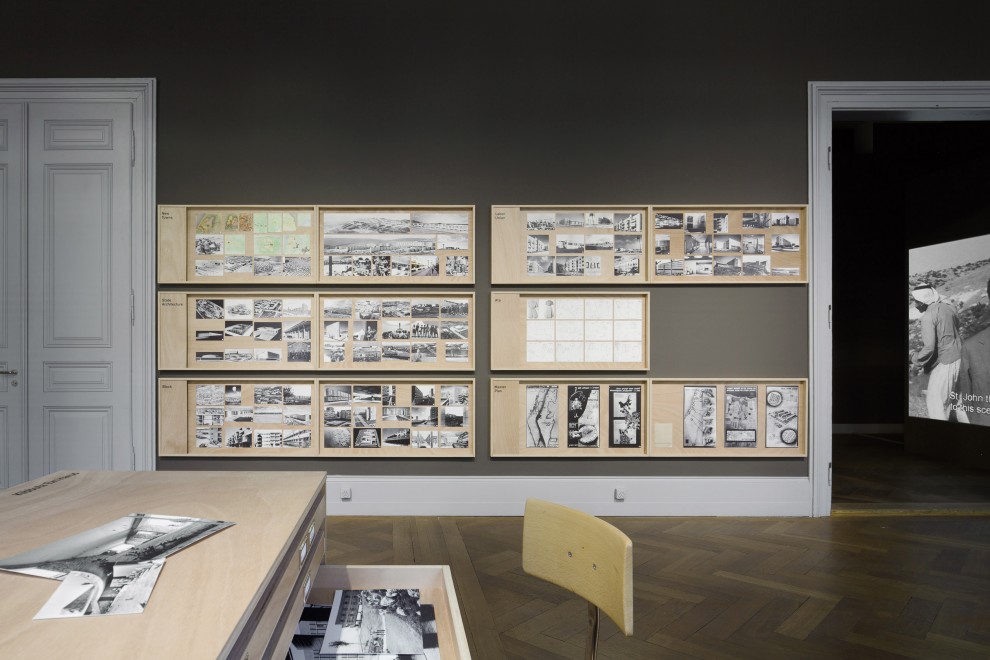
The Object of Zionism. Architecture of Statehood in Israel
The architecture and history of settlement of the State of Israel represent a unique project in the history of Late Modernism – unparalleled in the scale and speed of its realisation. The systematic planning experiment led to the construction of an artificial landscape as well as the erection of dozens of new cities and hundreds of new rural settlements. Furthermore there is hardly any other place that demonstrates more clearly than Israel how architecture cannot be separated from basic social, economic and political conditions.
The exhibition in the Swiss Architecture Museum is based on the concept of an image and plan archive featuring various aspects of the architecture and spatial planning of Israel between 1948 and 1973. Still widely unknown in Europe the material to be shown provides a multi-faceted and critical portrayal of the first 25 years after the establishment of the State of Israel; various films, which will be shown in the exhibition, as well as presentations of current studies create a link to present conditions and issues.
Basel already exists as a mythical place in the history of Israel: in 1897 it served as the venue of the First Zionist Congress that took place in the Stadtcasino directly vis-à-vis the premises of S AM.
