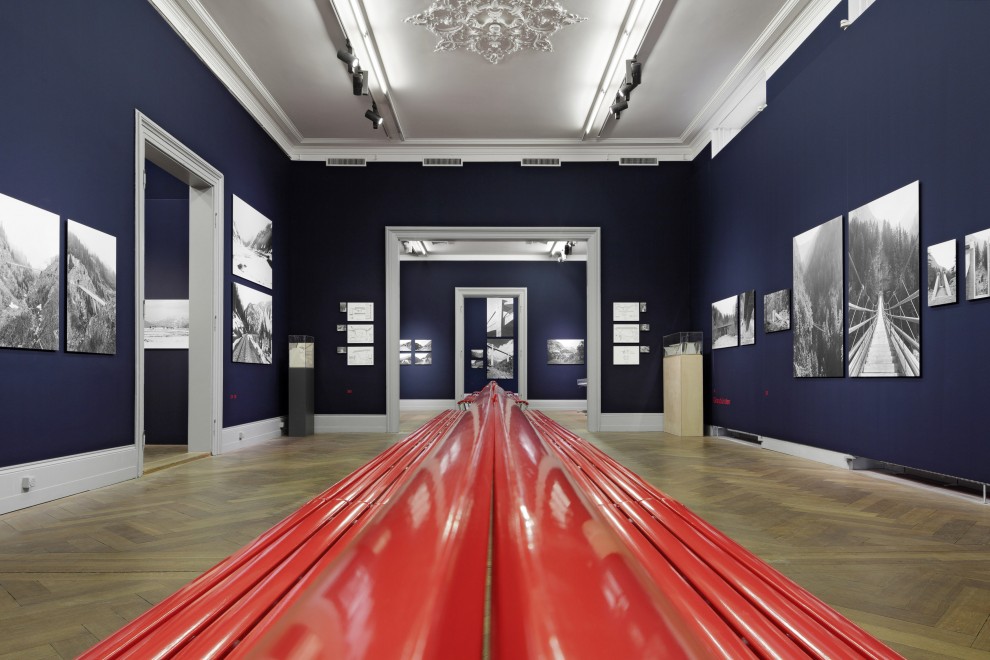
Landscape and structures
A personal inventory by Jürg Conzett, photographed by Martin Linsi / Swiss contribution to the 12th International Architecture Exhibition of Venice.
This exhibition showcases civil engineering structures which stand out by virtue of their special relationship with the landscape. Civil engineering structures comprise bridges, footbridges, tunnels, retaining walls, passageways, i.e. structures which serve as transport routes. The authors are interested primarily in designed structures with architectural aspirations; structures which on the one hand directly address issues of engineering and economic efficiency and, on the other, are intended to evoke certain sensations among those who use and observe them.The photographs are the result of various joint forays made by the authors throughout Switzerland.
The aim of the work is to illustrate the personal view of an engineer on works that have great meaning for him. In this sense the exhibits have been selected subjectively, without any claim to a balanced choice. In some cases it was a matter of refreshing personal memories of structures that had made a lasting impression on Conzett at a time when he was making his own career choices.
S AM Swiss Architecture Museum will show a version of the exhibition that is in accordance with its premises.